Coleção: Klaus W. Gruner
Painel 13
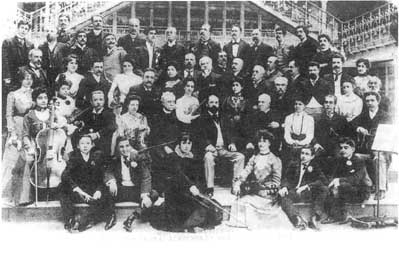
1.
Maestro Alfredo Keil.
2. Guilhermina Suggia – Celebre Violoncelista.
3. José Vianna da Motta. Pianista.
4. Sociedade de Música de Camara. Organizada por Alexandre Rey
Collaço em 1900.
5. Tuna Commercial de Lisboa.
6. Tuna Academica de Lisboa.
7. Sociedade de Música de Camara – Lisboa (Bilingue).
8. Sexteto do Theatro do Gymnasio – Fundado em 1 d’Outubro
de 1902.
9. Quartetto Mantua – Fundado em maio de 1904.
10. Orchestra da Real Academica de Amadores de Musica.
11. Serenata Thomarense – Thomar.
12. Banda da Guarda Municipal de Lisboa.
13. Orchestra do Real Collegio Militar.
MÚSICA
A
vida musical do país era, desde a revolução vintista
(1820-23) muito mais rica do que hoje geralmente se conhece. As sociedades
filarmônicas foram uma forma de liberalismo na música. O
concerto de 1822 de Domingos Bontempo foi a diapasão da nova organização
musical em Portugal. Por todo o país surgem sociedades civil (orquestras,
tunas) e organizações militares (filarmônicas, bandas)
que entre si rivalizam na formação de artistas e na divulgação
pelas diversas camadas sociais de textos musicais de gosto burguês
e popular. Foram pois, essas agremiações qu estabeleceram
a charneira entre os grandes músicos (como Guilhermina Suggia e
Viana da Motta, por exemplo) e as canções populares de raiz
agrária.
Ao postal ilustrado esta
exuberante cultura musical não passou desapercebida. Nele se registraram
os múltiplos agrupamentos espalhados pelo país, como que
a transmitir ao país marcos de sua presença n história.
Em pose, frente a câmara fotográfica, aqueles músicos
anônimos não pensariam que a investigação hitórica
os iria apanhar em flagrante, para um melhor interpretação
da cultura musical de outras épocas.
Ao postal coube também
a divulgação das letras e das pautas do folclore musical
popular, como que a solicitar ao futuro o renascimento da música
de outras eras. (Marcelo del Cima)
MUSIC
The
musical life of the country had been, since the twenties revolution (1820-23)
much richer than it is generally known today. The philarmonic societies
were a form of liberalization in music. Domingos Bontempo was the pitch
of the new musical organzations in Portugal. There are civil associations
(orchestras, troups of musical studens), and military organizations (philarmonic
societies, bands) that rivalize in the formation of artists and in the
divulgation of musical texts of bourgeois and popular tastes through the
various social levels that are established all over the country. These
associations were, therefore,the ones that established the connections
between the great musicians (such as Guilhermina Suggia and Vianna da
Motta) and the popular songs or agrariam roots.
The illustrated postcard
did not overlook this exhuberant musical culture. The multiple groups
found all over the country, as if to transmit to the country highlights
of their presence in history, are registered in them. Posing, acing the
camera, these anonimous musicians would never have thought that a historical
research would capture them in action to be used for a better interpretation
of the musical culture of other times.
The postcard took part
as well, in divulging the words and scores of popular musical folklore,
as if asking the future for the rebirth of music from other epochs.